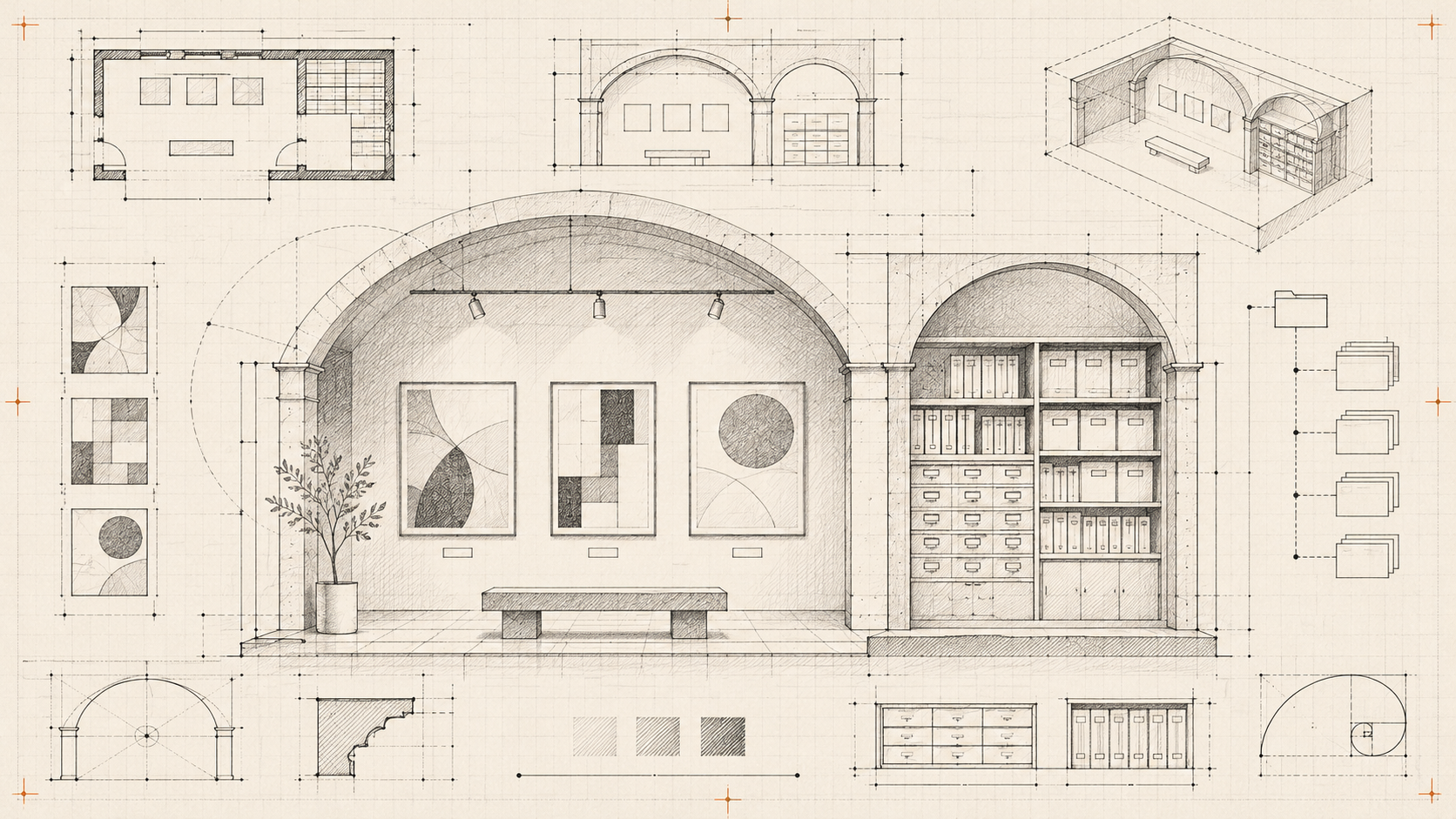
A virtual gallery can give artwork room to breathe. It can also make visitors search through an unfamiliar space for a title that would fit comfortably beneath an image. Start with the collection, then choose its presentation.
Create a reliable artwork record
For every piece, record its title, date, medium, dimensions and publication permission. Keep availability separate from the artwork description so sold work can remain in the archive without appearing available to buy.
Use a clear distinction between a photograph of the work, a detail crop and a visualisation of it in a room. AI-generated surroundings should not imply an exhibition or installation that never happened.
Build two routes through the collection
A simple index helps people scan by series or medium. An optional spatial gallery can create a more curated sequence. Both should lead to the same artwork record and contact action.
Avoid making visitors walk down a virtual corridor just to compare two pieces. Offer direct navigation, named sections and an easy return to the index. Keep captions outside the canvas as readable text.
Make maintenance part of the design
Test adding a very wide work, a portrait piece and an item with a long title. Define how images are cropped and when the full image appears. Keep originals outside the public delivery folder and serve appropriately sized versions.
The useful outcome is that someone understands the work and can ask an informed question. A gallery treatment should support that conversation, not become the only thing a visitor remembers.