A recruiter opens a portfolio to understand your work. Asking them to solve a navigation puzzle before seeing it is a risky introduction, even for a game developer.
Lead with the project and your role
Show a short clip, the genre, the platform and your specific contribution. For team work, distinguish systems you built from assets and mechanics created by others. Label prototypes, jam entries and released titles honestly.
Write one technical note per project: the problem, the constraint and the approach. Explain a behaviour tree, save system or performance decision with a concrete example rather than a wall of engine logos.
Offer a small playable slice
Let visitors choose to launch a demo. Display download size, input requirements and expected session length if known. Keep screenshots and a video available when browser execution is unavailable.
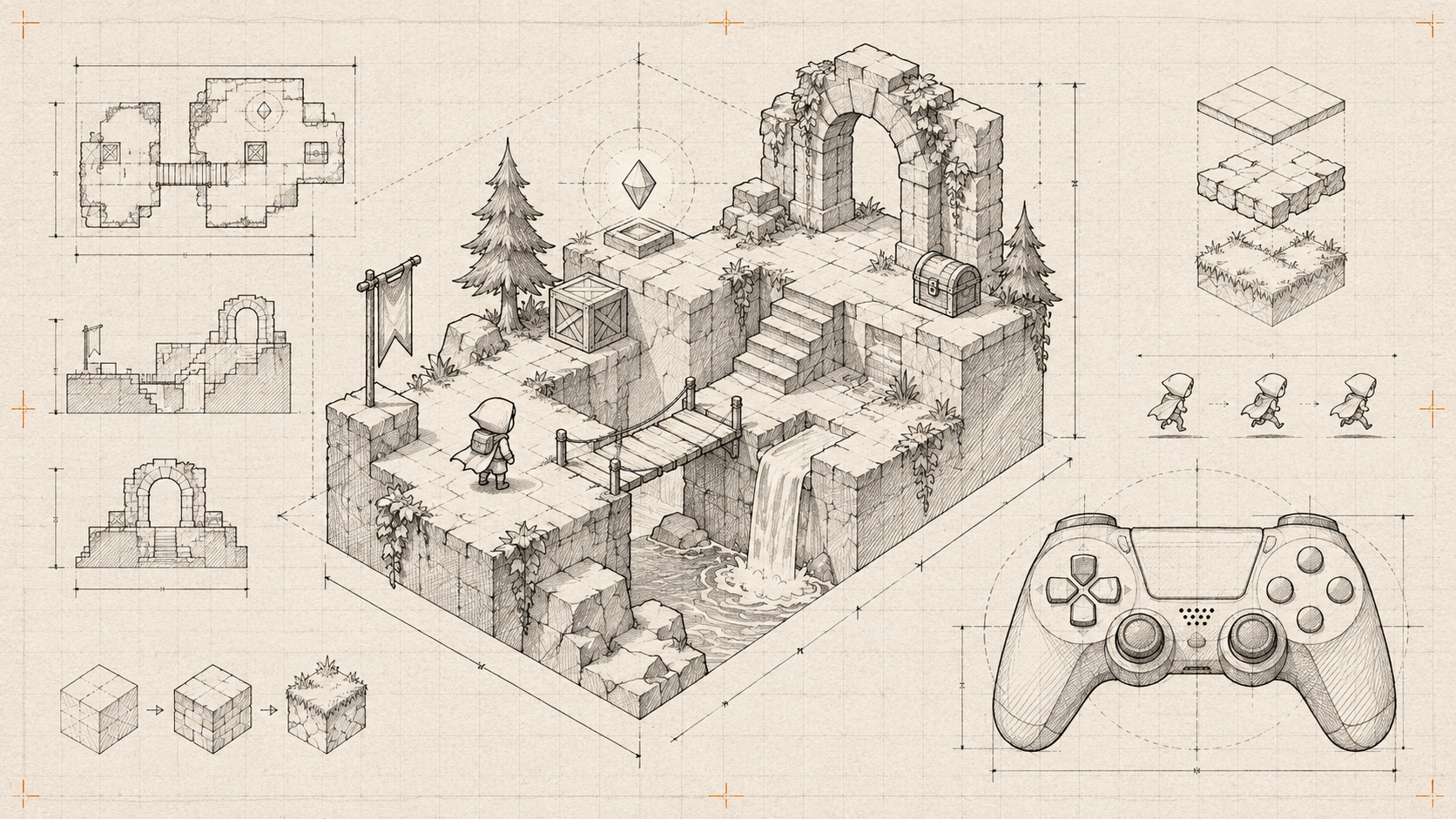
A portfolio scene can echo the game’s visual language, but project links and contact information should remain ordinary controls. Avoid loading several game builds as soon as the home page opens.
Check the reviewer’s path
Can someone find your role, watch relevant evidence and contact you without installing anything? Try that journey on a laptop without a mouse and on a phone.
Do not invent player counts or performance gains. A clear explanation of a small system you actually built is stronger evidence than a large claim that cannot be checked. Let the work provide the personality; keep the route to it straightforward.