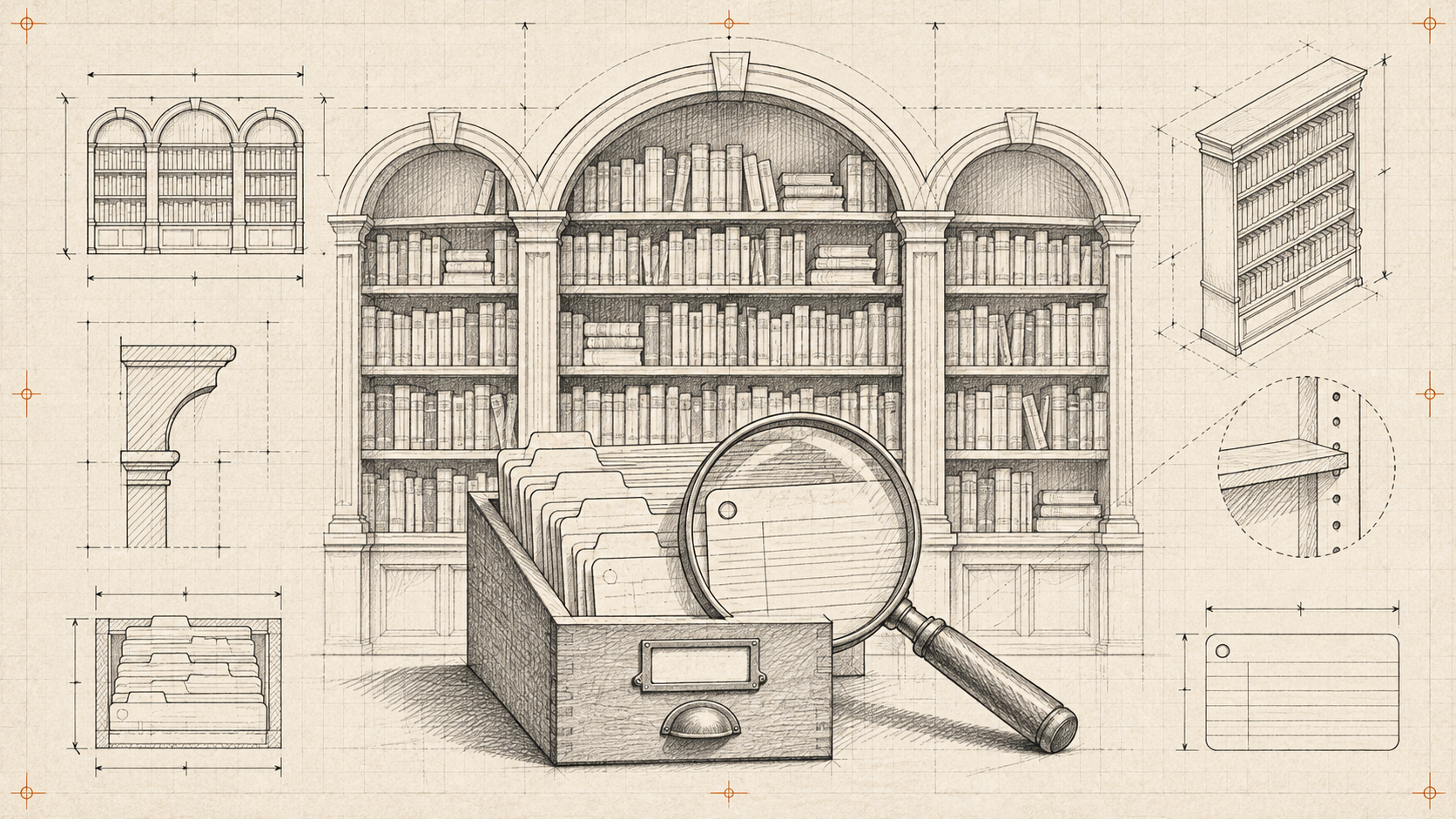
A virtual shelf is an appealing metaphor. It becomes frustrating when a student must inspect dozens of spines to find a resource that a search field could locate immediately.
Start with catalogue data
Give each resource a stable record with title, creator, subject, format and an access route. Separate metadata from the file itself. A public description does not automatically mean the institution has permission to distribute the document.
Decide who maintains links, editions and availability. Broken links are a content operations problem as much as a technical one.
Make search the reliable route
Provide a normal search and filter interface. Preserve the search query when a reader returns from a record. Handle no-result searches with useful alternatives instead of a dead end.
An optional spatial view can support a curated collection or exhibition. It should lead to the same records as the catalogue and never bypass authentication for restricted materials.
Add AI carefully
If an assistant answers questions about the collection, make it cite actual catalogue records. It should distinguish a known resource from a generated suggestion and admit when it cannot find an answer. Do not send restricted document text to a new service without the institution’s authorisation.
Test an expired session, an unavailable resource and an old shared link. A good library interface tells the reader what they found, whether they can access it and what to do next. The shelves are a presentation choice; the catalogue is the foundation.