A buyer likes a ring in a 3D viewer and asks for a quote. The sales team receives “the gold one” with no size or reference. The viewer created interest, but the catalogue lost the specification.
Give every sellable variant an identity
Separate the design from its metal, size, stone specification and finish. Give the selected combination a stable reference. Keep stock status and made-to-order lead time distinct.
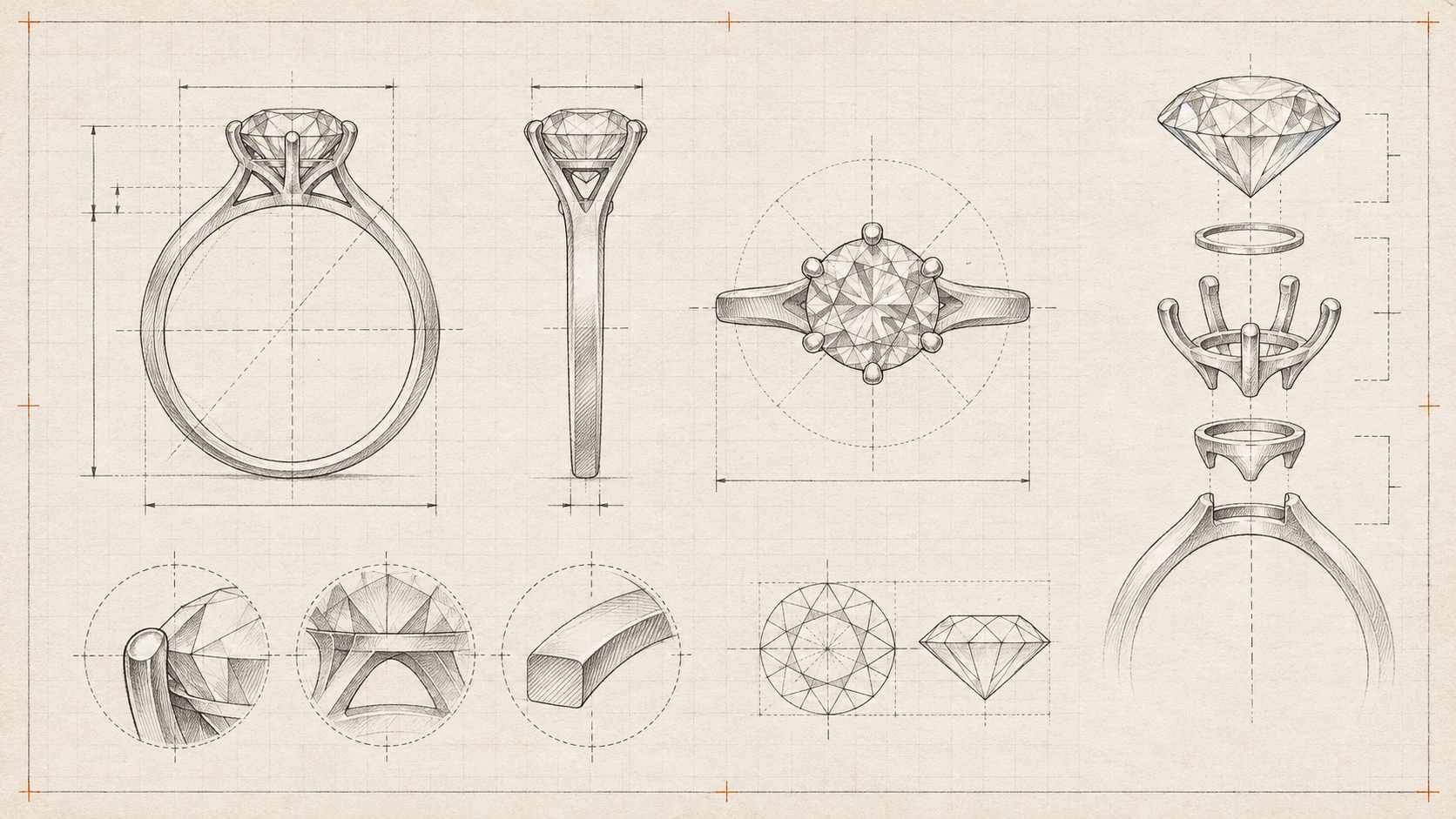
Show dimensions in text with units. A model on an empty background does not communicate scale reliably. Use a labelled reference view where it helps, without suggesting that a render guarantees exact colour or stone appearance.
Carry the selection into the enquiry
When someone requests a quote, attach the product reference and chosen options. Show a readable confirmation before submission. For wholesale enquiries, include quantity and destination only when needed to prepare the response.
If prices depend on changing inputs, explain whether the displayed amount is indicative or firm and when it was calculated. Resolve final commercial terms through the appropriate sales process.
Protect the catalogue from ambiguity
Label illustrative imagery, review permissions and keep unavailable options out of active selectors. Test a discontinued variant and an enquiry opened from an old link.
The useful measure is a quote request that the sales team can act on without guessing. A modest viewer attached to accurate product data can serve that purpose better than a spectacular scene with incomplete specifications.