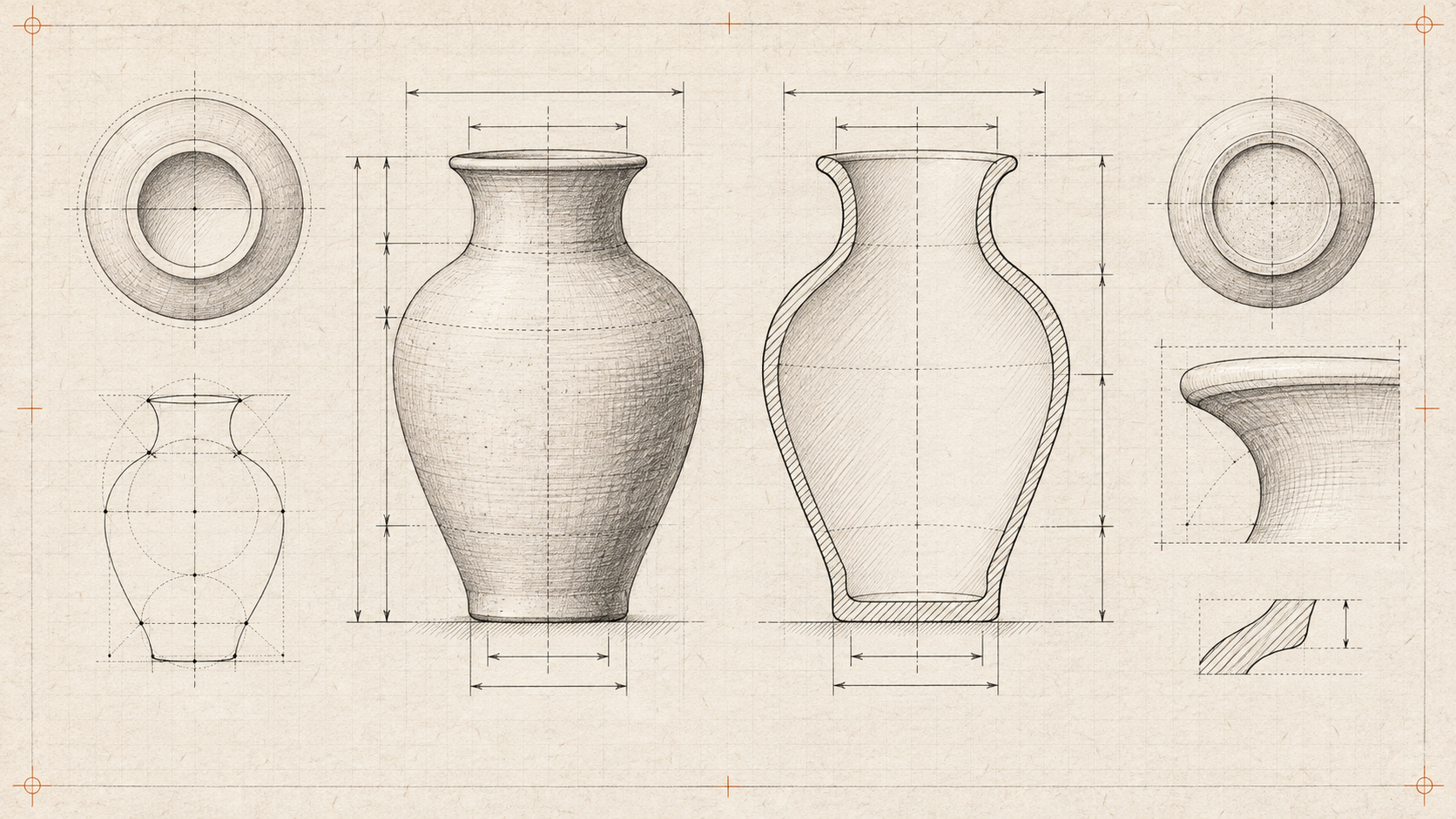
Two vessels can look the same size on a web page while being very different objects in a room. For ceramics, scale and surface are often more important than an elaborate virtual exhibition.
Build the object record
Record dimensions with units, materials, finish and whether the piece is unique or part of an edition. Keep availability current. If the object has sold, retain its archive page while making that status unambiguous.
Photograph the full object, a surface detail and any functional opening or underside that matters. Describe variations honestly. A glossy digital material is not a substitute for documenting the actual glaze.
Use 3D to reveal form
A rotational view can explain a handle, profile or asymmetric shape. Provide a useful initial angle and a reset action. Include a labelled scale reference rather than expecting a floating model to communicate dimensions.
Avoid placing every object inside a large simulated gallery by default. A simple collection grid helps comparison; an optional exhibition route can provide curation and atmosphere.
Make the next step precise
Carry the object reference into an enquiry and state whether shipping is arranged separately. Keep payment and packing promises aligned with the actual sales process.
Test a one-off piece that becomes unavailable while someone is browsing, and a model that fails to load. The page should still show the relevant photographs, dimensions and status. The technology is doing its job when a buyer can ask about the right object with realistic expectations.