A green roof in a render does not establish a building’s environmental performance. An architecture portfolio needs to explain the decisions behind the image and distinguish a design intention from a measured result.
Put the project in context
Describe location, climate assumptions, programme and project stage. State the team’s scope and your contribution. Mark proposed work clearly so visitors do not read a concept as a completed building.
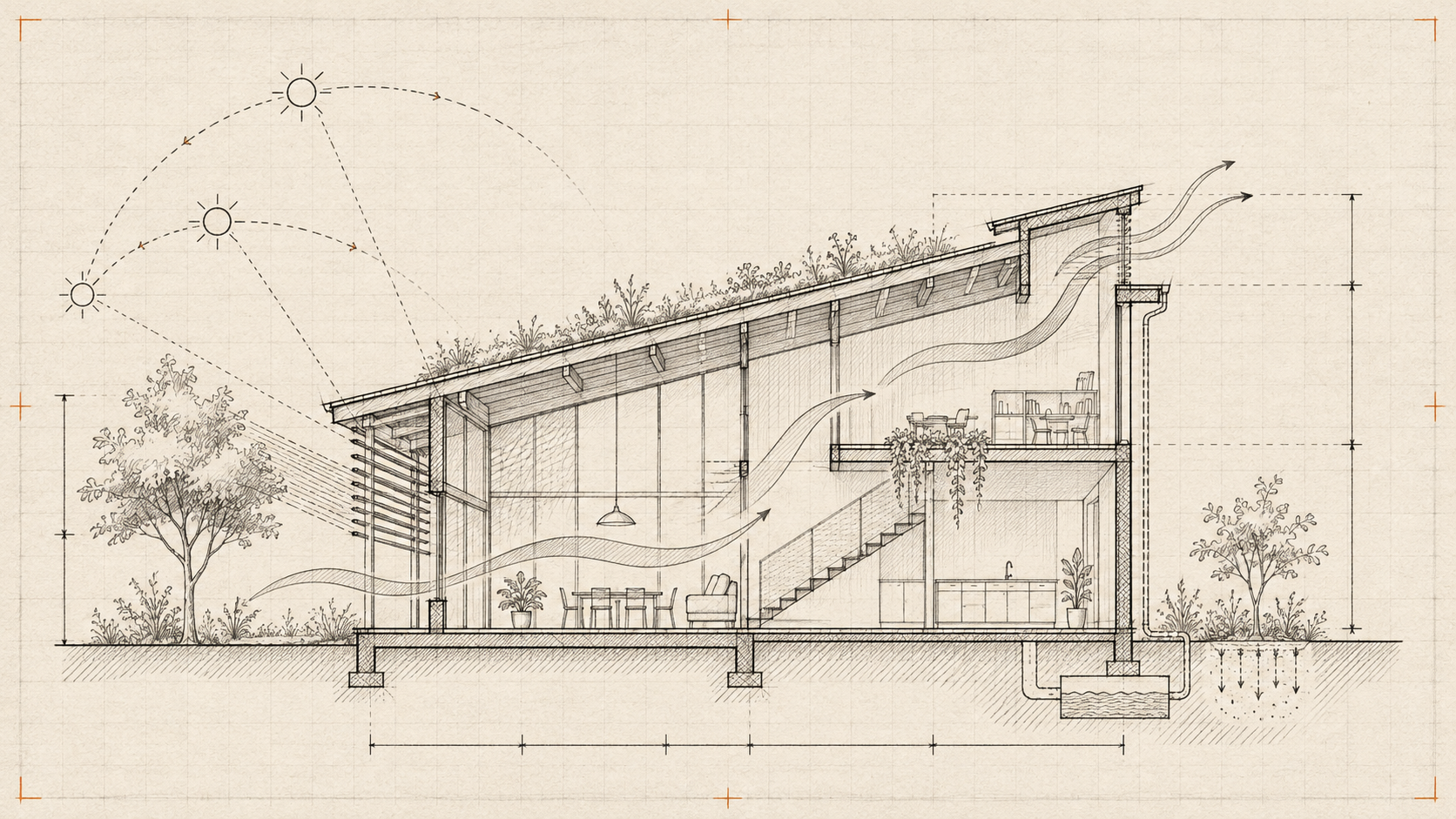
Choose a few decisions to explain: orientation, shading, material selection or ventilation strategy. Use annotated sections and plans before deciding whether a 3D sequence adds anything.
Attach evidence to claims
If a metric is included, state the baseline, method and whether it comes from a simulation or operation. Link to the relevant report when publication is permitted. Avoid unsupported claims such as “zero impact” or a percentage improvement without a defined comparison.
A visual walkthrough can connect a shading device to an interior view. Keep the explanation in text as well. Show seasonal or design alternatives only when the underlying model supports that comparison.
Review the editorial boundary
Check rights for drawings, consultant reports and client information. Remove private details before publication. AI-assisted visualisations should be labelled and reviewed for architectural inconsistencies.
Finish with a concise account of what was learned and what still needs validation. A portfolio earns trust when it makes the reasoning inspectable, including the limits of the evidence, rather than asking an attractive render to prove everything.